
 English
 عربى
عربى


The Fluid Dynamics and Metrological Efficiency of Large-Scale Bulk Flow Systems
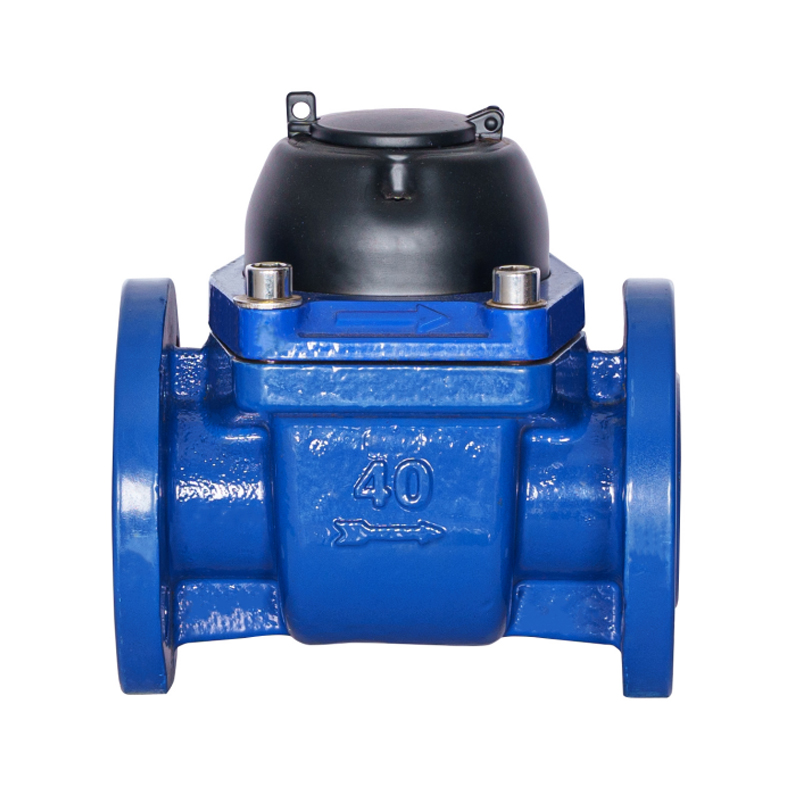
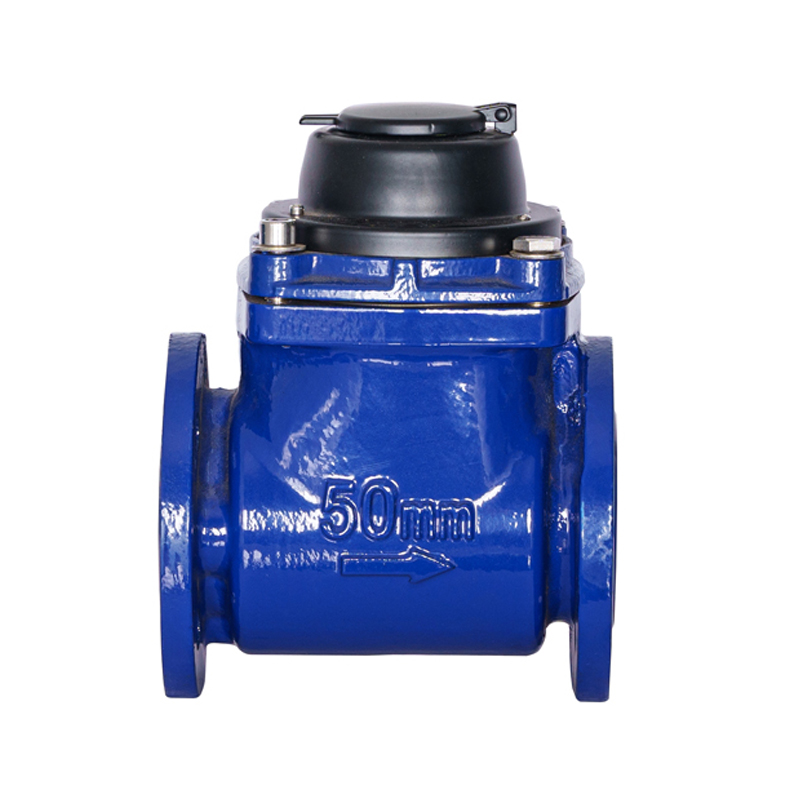
Integrating a heavy-duty WPH horizontal spiral wing water meter (commonly structured as a horizontal Woltman turbine bulk meter) provides municipal water authorities, industrial processing plants, and agricultural irrigation networks with a reliable, high-volume fluid measurement system. This configuration positions a balanced, helical spiral rotor axially along the longitudinal path of the pipe, allowing the oncoming fluid to drive the impeller wheel symmetrically. This internal geometry creates a highly responsive, low-friction kinetic system that delivers a head loss reduction of up to 55% compared to traditional vertical-axis multi-jet or positive displacement meters. This structural stability maintains consistent volumetric flow tracking across wide transmission mains, safely handling extreme peak capacities up to 250 cubic meters per hour in a standard DN100 pipe size without causing systemic pressure drops.
In modern water utility infrastructure, measuring bulk distribution links requires balancing high-flow capture limits with minimal fluid resistance. High-velocity trunk lines carry substantial kinetic energy and frequently transport fine suspended grit or scale particles. Conventional multi-jet utility meters rely on internal restriction plates and narrow chambers to direct water currents toward the impeller, making them prone to clogs and rapid bearing wear in high-volume applications. Transitioning to an axial horizontal spiral wing assembly resolves these physical weaknesses by maintaining an open, unobstructed measuring tunnel. This setup allows solid particulates to pass cleanly through the meter without striking or jamming the balanced rotor assembly, safeguarding long-term measurement accuracy.
Rotor Hydromechanics and Magnetic Transmission Engineering
The measuring precision and lifespan of a bulk utility meter depend directly on the structural balance of its internal spiral blades and the design of the dry-dial magnetic coupling that links the rotor to the register.
Hydrodynamically Balanced Helical Rotors
Industrial horizontal spiral wing meters feature molded plastic rotors configured with pitch angles optimized for fluid dynamic efficiency. The front and rear bearing pins are seated in wear-resistant synthetic sapphire or tungsten carbide cups. When water streams strike the helical surfaces, the fluid creates an upward hydrodynamic lift that unloads the lower bearing surfaces, reducing mechanical friction and allowing the meter to maintain high responsiveness at low starting flow velocities.
Hermetically Sealed Dry-Dial Magnetic Transmissions
To prevent pipeline debris, iron oxides, and moisture from clouding the display, the mechanical gear train is split into two sections. The wet-side rotor shaft spins an array of high-coercivity rare-earth magnets. These magnets project magnetic lines of force through a thick, non-magnetic stainless steel pressure wall, turning a matching magnet array inside the dry, vacuum-sealed register capsule. This isolation ensures the register numbers remain perfectly legible and safe from mineral scaling or freezing over decades of service.
Comparative Design Evaluation: WPH Horizontal Spiral Wing Meters vs. Rotary Piston Volumetric Meters
Selecting the correct bulk monitoring platform requires analyzing maximum weight capacities against pressure drops, sensitivity to suspended solids, and total space footprints. The comparative table below outlines the engineering boundaries between horizontal spiral wing configurations and rotary piston designs.
| Technical Engineering Parameter | WPH Horizontal Spiral Wing Meter (Woltman Axial) | Rotary Piston Volumetric Meter (Positive Displacement) |
|---|---|---|
| Induced Head Loss (Pressure Drop) | Ultra-Low (Typically Below 0.01 MPa at Nominal Flow) | High (Substantial energy loss due to chamber restriction) |
| Particulate Tolerance Capacity | High (Straight-Through Body Bypasses Fine Suspended Solids) | Critical Vulnerability (Fine sand can scratch and jam pistons) |
| Maximum Overload Flow Endurance | Exceptional (Handles high peak surges up to 200% Q3) | Poor (High speeds cause mechanical wear and breakdown) |
| Low-Flow Sensitivity Threshold (Q1) | Moderate (Requires minimum kinetic velocity to turn blades) | Superior (Captures tiny leaks down to drops per hour) |
| Interchangeable Measuring Inserts | Standardized (Core mechanism slides out for calibration) | None (Requires complete housing removal to service) |
The data comparison highlights a distinct division in application optimization. Rotary piston positive displacement meters offer unparalleled accuracy for narrow, small-diameter domestic lines where capturing tiny low-flow leaks is critical. However, for industrial processing loops, district zoning networks, and deep-well agricultural extractions, their internal chambers create massive flow restrictions that reduce delivery pressures. Horizontal spiral wing water meters solve these pressure-drop concerns by using an open axial profile that allows high-volume fluid layers to pass through smoothly, maximizing downstream delivery pressures.
Advanced Signal Output and Intelligent Utility Smart-Grid Connectivity
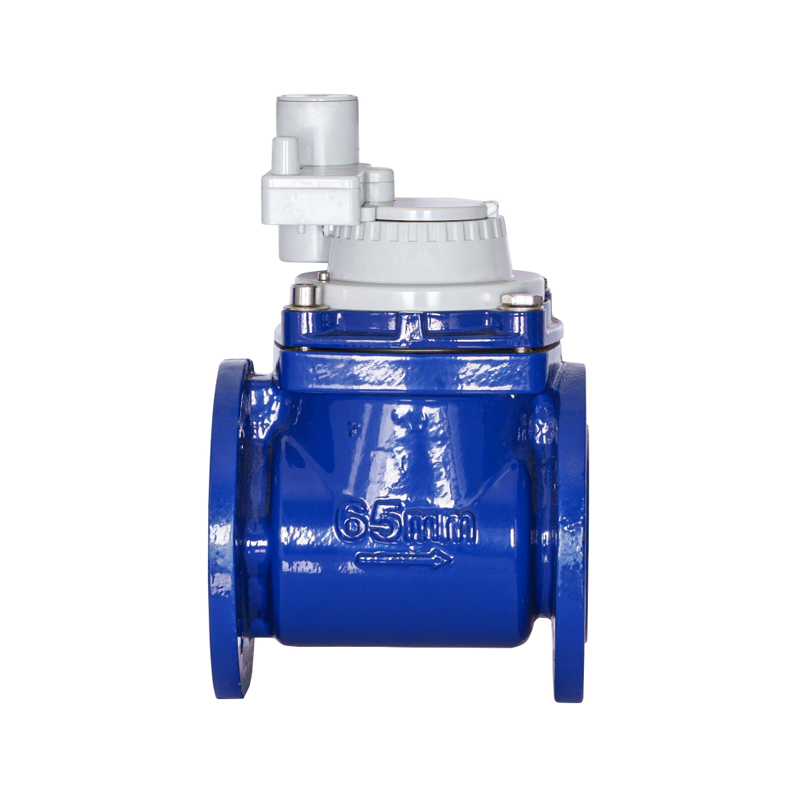
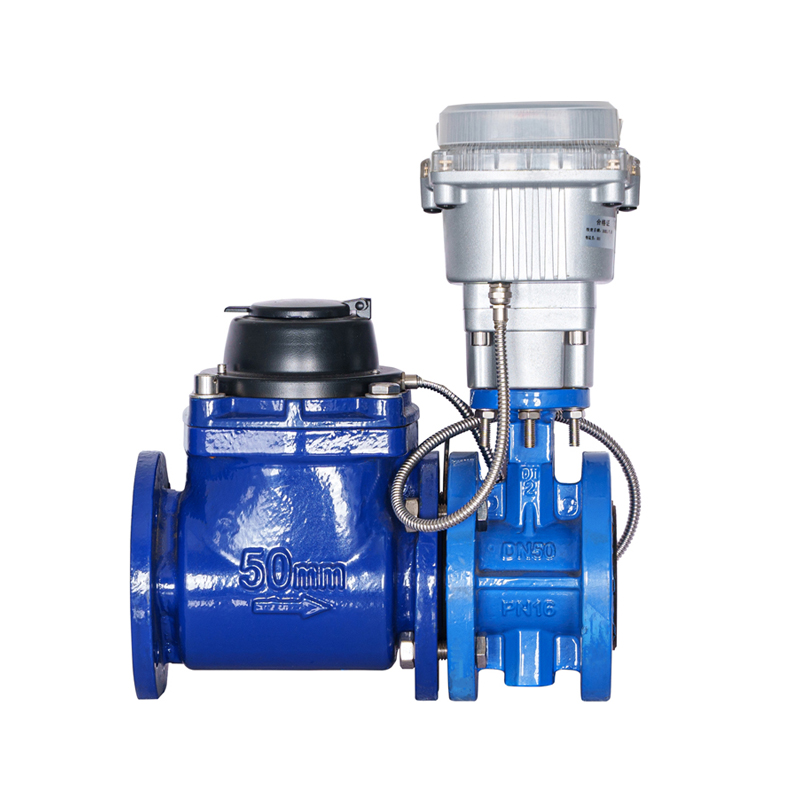
Modern horizontal Woltman meters integrate electronic data transmission capabilities to connect directly with automated building management systems and municipal smart grids.
- Dual-Readout Reed Switch Sensors: The register head is designed to house a clip-on dry contact reed switch sensor. As the mechanical wheels spin, a tiny embedded magnet triggers pulse signals (e.g., 1 pulse per 1,000 liters), sending real-time flow data to remote telemetry units.
- Optoelectronic Non-Reversing Encoders: For high-frequency industrial dosing systems, optical infrared sensors monitor the movement of the lower reflective wheels. This configuration tracks instantaneous flow rates and detects backward flow to trigger automatic pipeline alerts.
- NB-IoT and LoRaWAN Module Integration: The metal register shroud can support low-power wireless transceivers. These modules broadcast hourly consumption profiles directly to cloud monitoring software, eliminating manual entry errors and streamlining billing operations.
Step-by-Step Flow Straightening and Pipeline Commissioning Protocol
Because fluid turbulence, swirling currents, and uneven pipe velocities can destabilize a horizontal rotor, installation teams follow a strict placement and mounting sequence.
- Upstream Straight Pipe Verification: Calculate the straight pipe layout using the standard multiplier rules. Ensure a straight, uninterrupted pipe run of at least 10 times the nominal diameter (10D) upstream from the meter face to smooth out fluid turbulence caused by elbows or valves.
- Downstream Clearance Allocation: Provide a straight pipe section of at least 5 times the nominal diameter (5D) downstream from the meter outlet flange, allowing fluid layers to merge smoothly back into the pipeline channel without causing backpressure ripples.
- Debris Strainer Pre-Mounting: Install a heavy-duty mesh strainer basket upstream from the meter entry point. This strainer intercepts large stones, welding slag, and pipe scale that could chip or break the spinning plastic rotor blades.
- Flange Alignment and Gasket Seating: Align the meter housing horizontally with the pipe centerline, ensuring the cast-iron arrow matches the actual flow direction. Set high-density rubber gaskets between the flanges and cross-torque the steel bolts evenly.
- Slow Hydrostatic Pressure Conditioning: Open the upstream main isolating valve slowly to fill the meter chamber with water over a period of 60 to 90 seconds. Avoid sudden pressure surges, which can over-speed a dry rotor and shear the gear pins.
Mitigating Hydraulic Velocity Distortion and Velocity Profiling Creep
While commercial-grade horizontal spiral wing meters are built for harsh industrial environments, fluid vortices and pipeline air pockets can compromise tracking accuracy over time.
Preventing Air Pocket Over-Registration Errors
Air pocket errors happen when large bubbles gather at the top of a partially filled pipeline. Because compressed air travels much faster than liquid water, these air pockets spin the horizontal spiral wing at extreme speeds, leading to falsely inflated usage readings. To maintain true volumetric metrics, installers should position the horizontal meter at a low point in the pipeline network and install automatic air release valves upstream to vent trapped gases cleanly before they hit the measuring elements.
Controlling Asymmetrical Velocity Core Skew
Placing a horizontal spiral wing meter directly behind a pressure-reducing valve can warp the fluid velocity core, concentrating high-speed streams along one side of the inner chamber. This uneven force applies twisting stress to the rotor shaft, accelerating bearing wear and skewing calibration profiles. Engineers can neutralize this fluid distortion by installing honeycombed flow straightening plates inside the upstream pipe section, ensuring a balanced, symmetric water velocity profile strikes the spiral wing blades.